LNG Plant Startup Readiness: 7 Things Operators Should Validate Before First Gas

An LNG plant can be mechanically complete and still not be ready to operate. Equipment may be installed. Commissioning activities may be progressing. Procedures may have been approved. But before first gas, plant owners still need confidence that the LNG plant startup readiness picture is complete across equipment, people, procedures, safety systems, maintenance and field conditions. This distinction matters because startup is where engineering assumptions, construction decisions and operational reality meet. A strong readiness program therefore asks more than whether the plant is mechanically complete. It asks: Can the facility, workforce and operating systems perform safely and reliably from day one?
What is LNG plant startup readiness?
LNG plant startup readiness is the structured process of confirming that a facility is prepared to transition from commissioning into safe and reliable operation. It covers more than equipment testing. A complete readiness assessment should connect:
- Mechanical completion
- Commissioning and system verification
- Process safety
- Operating procedures
- Operator competency
- Maintenance readiness
- Emergency response
- Field conditions
- Engineering and asset information
For LNG facilities, the transition is particularly demanding because operations can involve cryogenic systems, complex process equipment, high-pressure systems, flammable hydrocarbons and tightly integrated safety controls. Federal requirements for LNG facilities in the United States are established under 49 CFR Part 193, which includes requirements covering design, construction, equipment, operations and maintenance of LNG facilities. The practical implication is straightforward: Startup readiness should be treated as an integrated operational milestone, not simply the final step after construction.
Why does LNG startup readiness matter before first gas?
The cost of finding a problem changes dramatically as a project moves toward operation.
- A design issue found during engineering can often be corrected digitally.
- A construction deviation may require field remediation.
- A procedure gap discovered during commissioning can delay startup.
The same issue discovered after startup can affect production, maintenance, safety or availability. This is why plant owners should bring operations, maintenance and safety teams into readiness activities early rather than treating startup as a handover event. A useful readiness model is: Design → Construction → Commissioning → Workforce → Startup → Operations Each stage should reinforce the next.
What should an LNG plant startup readiness assessment include?
1. Has mechanical completion been validated?
Mechanical completion is an important milestone, but it is not the same as operational readiness. Teams should confirm that critical systems and equipment are complete and correctly configured before progressing toward startup. Depending on the facility and system, verification may include:
- Piping and equipment completion
- Pressure and leak testing
- Flushing and cleaning
- Electrical checks
- Instrument loop verification
- Control system checks
- Safety system testing
- Punch-list closure
The key question is not simply: “Is the equipment installed?” It is: “Is the system complete, tested and ready for its intended operating function?” This distinction becomes increasingly important as commissioning moves toward introducing hydrocarbons.
2. Do the operating procedures reflect the actual plant?
Operating procedures are often developed before the final physical configuration is fully established. Construction changes, equipment modifications and field deviations can create differences between documented procedures and the plant operators ultimately encounter. Before startup, teams should verify procedures against actual operating conditions. Priority areas include:
- Startup and shutdown
- Normal operating procedures
- Emergency shutdown
- Equipment isolation
- Lockout/Tagout
- Permit-to-work
- Abnormal operating conditions
- Emergency response
- Maintenance procedures
The Occupational Safety and Health Administration (OSHA) Process Safety Management standard also provides a useful reference point for management of highly hazardous processes, including requirements around operating procedures, training, mechanical integrity and Pre-Startup Safety Review where applicable.
3. Are operators ready for the physical LNG facility?
A procedure manual can explain what should happen. It cannot always provide the spatial familiarity required to execute that procedure confidently. Operators need to understand where critical equipment, valves, isolation points, access routes and emergency systems are located. This is especially relevant when:
- A new LNG facility is entering operation
- Experienced personnel are being transferred
- Contractors are joining the operating workforce
- Existing facilities are being expanded
- New process systems are introduced
Operator readiness should therefore combine knowledge, procedural competence and familiarity with the physical asset. Simulation can strengthen this preparation by allowing teams to rehearse procedures before relying exclusively on live equipment.
4. Have high-consequence scenarios been rehearsed?
Startup readiness should not focus only on normal operation. Operators should also understand what happens when conditions deviate from the expected sequence. Depending on the facility's hazard analysis and operating procedures, readiness exercises may address scenarios such as:
- Emergency shutdown
- Loss of containment
- Fire or gas detection
- Loss of utilities
- Equipment failure
- Abnormal process conditions
- Evacuation
- Isolation and restart
The value of simulation is particularly clear here. A controlled environment allows teams to repeat critical scenarios without creating the same operational exposure as practicing on a live production asset. This is where workforce readiness becomes part of process safety rather than simply a training metric.
5. Can maintenance teams actually perform critical tasks?
An LNG plant may be ready to operate but difficult to maintain. That gap can remain hidden until the first inspection or shutdown. Before startup, maintenance teams should validate critical tasks such as:
- Valve access
- Pump and compressor access
- Instrument access
- Inspection points
- Equipment removal
- Tool clearance
- Lifting requirements
- Platforms and ladders
- Isolation locations
This is also where engineering models can provide value beyond design. A three-dimensional plant model can be reviewed from the perspective of the technician who must physically perform the work. The question becomes:
Can the maintenance task be performed as designed in the actual spatial environment?
Finding that answer before startup is considerably more valuable than discovering a clearance problem during a production-critical maintenance event.
6. Does the physical plant match the engineering information?
The engineering model is often treated as the source of truth. But construction can introduce changes. Equipment may move. Piping may be rerouted. Supports may change. Access platforms may be modified. These differences matter when engineering information later supports:
- Operations
- Maintenance
- Training
- Inspection
- Asset management
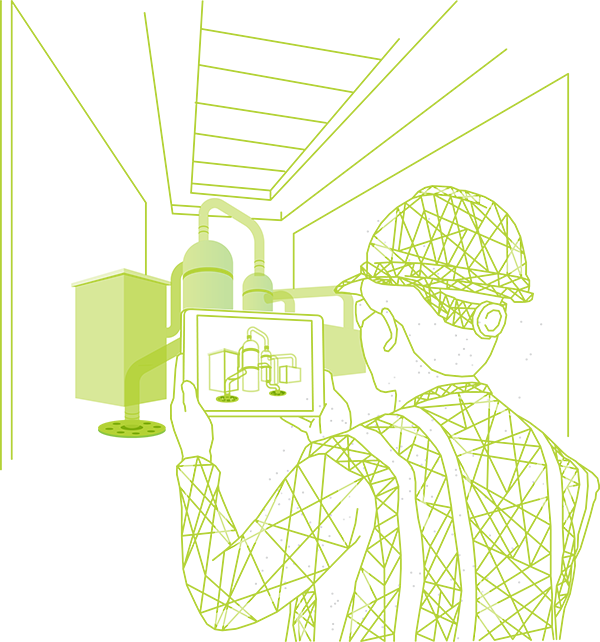
Field verification should therefore focus on the areas where physical accuracy has the greatest operational consequence. Modern digital workflows can compare engineering information with field conditions and help teams identify important deviations before those differences become operational surprises. One practical way to close this gap is augmented reality (AR) in LNG construction, which allows project teams to use engineering information directly in the field to verify installed conditions, identify deviations and address issues before they affect commissioning. This is particularly valuable when protecting critical first-gas targets, because construction discrepancies identified late can create rework, delay commissioning activities and increase pressure on the startup schedule.
7. Is the handover from project to operations genuinely complete?
One of the most overlooked aspects of startup readiness is the transition of information. A project may generate large volumes of engineering documents, drawings, procedures, inspection records and equipment data. But operations needs usable information. The handover should answer:
- Does operations have the latest plant information?
- Are procedures aligned with the final configuration?
- Are maintenance requirements available?
- Have training requirements been completed?
- Are outstanding deviations understood?
- Are inspection findings closed or formally managed?
- Can operators access the information they need?
The goal is not simply to transfer documents. It is to transfer operational knowledge. That operational knowledge also depends on maintaining a reliable connection between the digital twin and the physical LNG asset. Digital twin workflows can help teams maintain a common view of equipment, systems and field conditions, while AI-powered visual inspection can support construction quality checks and identify potential issues before they become operational problems. For a deeper look at how these technologies can improve LNG construction quality, see How Digital Twins and AI Inspection Are Improving LNG Construction Quality.
How can digital technology improve LNG startup readiness?
Digitalization becomes valuable when it connects activities that have traditionally operated in silos. For example:
- Engineering data can support immersive design validation.
- The same asset information can support operator familiarization and procedural training.
- Field data can be compared against engineering information during construction.
- Inspection data can support quality and asset-integrity workflows.
This creates a connected readiness model:
Engineering → Physical Asset → Procedures → Workforce → Inspection → Operations
The technology is not the objective. The objective is reducing the uncertainty between what the project intended to build, what construction delivered and what the operations team must actually run. Gastech's 2026 program reflects this broader direction. Its strategic themes include natural gas and LNG, AI, low-carbon solutions and energy efficiency, while its AixEnergy program specifically examines the deployment of AI across energy infrastructure and operational environments. Suggested Reads: Why LNG Workforce Readiness Will Decide Project Success in 2026
How should plant owners measure startup readiness?
A readiness review should produce measurable evidence rather than a simple green or red status. Useful indicators include:
| Readiness area | Example measure |
|---|---|
| Mechanical completion | Critical systems completed and verified |
| Safety systems | Required tests completed and findings closed |
| Procedures | Critical procedures validated against field conditions |
| Workforce | Operators assessed on required competencies |
| Training | Critical scenarios rehearsed |
| Maintenance | High-priority maintenance tasks physically validated |
| Field verification | Significant design-to-field deviations identified and resolved |
| Inspection | Critical findings closed or formally managed |
| Handover | Required operational information available to teams |
The exact measures will vary by facility, project phase and regulatory requirements. What matters is that readiness is evidence-based and cross-functional.
What does a truly operation-ready LNG plant look like?
A truly operation-ready LNG plant is more than a completed construction project. It is a facility where:
- Equipment has been verified
- Safety systems have been tested
- Procedures reflect the actual plant
- Operators understand the physical asset
- Critical scenarios have been rehearsed
- Maintenance activities are practical
- Field conditions are reconciled with engineering information
- Operations has the information required to run the asset
That is the difference between commissioning completion and operational confidence. For plant owners, the most important question before first gas is therefore not:
“Are we finished?”
It is:
“Are we ready to operate safely, reliably and as designed?”
What should LNG operators take to Gastech 2026?
Gastech brings together senior leaders across natural gas and LNG, low-carbon solutions, hydrogen, shipping and marine, electrification, and AI and digitalization. Its networking program also enables attendees to discover relevant participants and arrange one-to-one meetings before arriving in Bangkok, Thailand. For LNG owners, operators and project leaders, that makes startup readiness a practical executive conversation. The opportunity is to look across the complete transition: Engineering → Construction → Commissioning → Workforce → Operations Where is the largest readiness gap in your next LNG project?
Discuss your LNG readiness challenge with Exxar
Exxar helps energy organizations connect engineering data, immersive simulation, field workflows and AI-enabled inspection across the asset lifecycle.