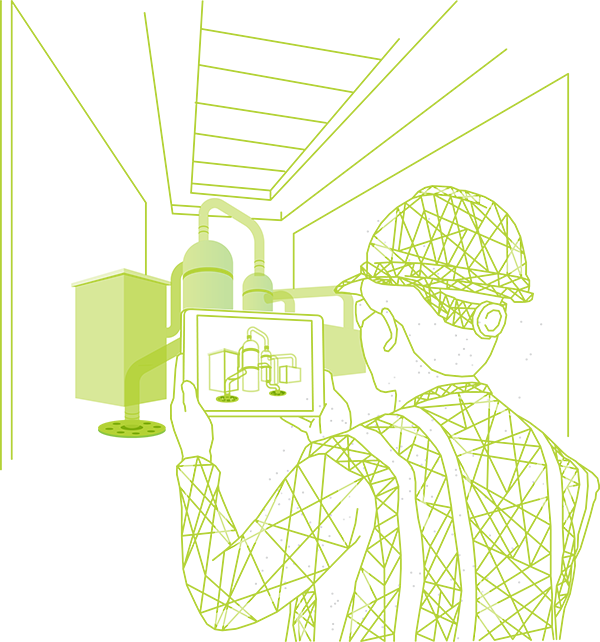
Industrial VR Training for Plant Safety: How US Manufacturers Preserve Critical Skills

Industrial VR training for plant safety gives manufacturers a way to prepare workers for complex procedures in a controlled virtual environment. When combined with suitable industrial 3D models and approved operating procedures, virtual reality (VR) can help teams practise tasks, recognize hazards, and preserve knowledge that might otherwise leave with experienced employees.
For US plant owners and operations leaders, the challenge extends beyond training delivery. Retiring technicians, complex equipment, production demands, and safety-critical procedures make workforce readiness an operational priority. Traditional instruction remains essential. But workers also need opportunities to practise what they learn before performing tasks on live equipment.
Industrial VR training can help bridge that gap by turning equipment models and procedures into interactive learning experiences. The business case depends on choosing the right tasks, validating the training content, and measuring improvements in workforce competency.
Key takeaways for plant owners and operations leaders
- Preserve institutional knowledge: Capture experienced workers’ procedures and troubleshooting insights in structured training scenarios.
- Practise without exposing workers to live hazards: Use simulations to rehearse selected high-risk or infrequent tasks.
- Connect engineering data with training: Reuse suitable computer-aided design (CAD) models instead of recreating every asset from scratch.
- Measure competency, not headset usage: Evaluate procedural accuracy, hazard recognition, and task completion against defined criteria.
- Start with a measurable operational problem: Pilot one important procedure before expanding across facilities.
Why is industrial VR training for plant safety becoming important?
US manufacturers must prepare employees to work safely around increasingly complex equipment while maintaining operational continuity. Experienced technicians hold valuable knowledge about equipment behavior, maintenance sequences, and unusual operating conditions. Transferring that knowledge takes time and structured instruction.
The workforce challenge has also attracted attention at the national level. A Deloitte and Manufacturing Institute study examined the manufacturing industry's skills gap and its implications for workforce availability. Its projections illustrate why manufacturers need a deliberate approach to attracting, developing, and retaining skilled workers.
For plant leaders, three practical issues stand out.
- Knowledge loss: Experienced workers may understand equipment-specific practices that are not fully documented in standard operating procedures.
- Training constraints: Live equipment training requires appropriate supervision, equipment availability, and suitable safety controls. It may also compete with production schedules.
- Inconsistent execution: Employees can understand written instructions without being ready to execute every step correctly under real working conditions.
VR offers another way to practise selected tasks. It does not eliminate the need for experienced instructors or hands-on qualification. Instead, it creates additional opportunities for workers to rehearse procedures before applying them on the plant floor.
How does digital twin workforce training work?
Digital twin workforce training uses a digital representation of industrial equipment or a facility as the foundation for a learning experience. Depending on the application, this may involve an engineering model, interactive simulation, operating procedures, or connections to additional operational data.
A practical workflow follows five steps.
- Select the equipment or procedure. Identify a task where workers need more practice, such as equipment inspection, maintenance preparation, or a defined safety procedure.
- Reuse suitable engineering models. Bring existing CAD assets or other appropriate 3D models into the training workflow.
- Translate procedures into learning scenarios. Define the required steps, decision points, safety precautions, and expected actions with input from subject matter experts.
- Build interactive practice. Let learners inspect components, follow task sequences, and respond to simulated conditions.
- Evaluate performance. Assess learners against defined competency criteria and identify areas requiring further instruction.
The distinction between a 3D model and a digital twin matters. A model can represent equipment geometry without reproducing its operating behavior. A more advanced digital twin may incorporate additional data or simulation, depending on the system's design.
Training teams should select the level of fidelity that matches the learning objective. A complex live-data integration is not automatically necessary for every safety training scenario.
Which industrial safety procedures are suited to VR training?
VR is particularly relevant when a task benefits from repeated practice, visual understanding, or exposure to scenarios that are difficult to recreate safely during routine operations.
Lockout/tagout and hazardous energy control
Lockout/tagout (LOTO) procedures help protect workers from hazardous energy during servicing and maintenance. Under OSHA's Control of Hazardous Energy standard, 29 CFR 1910.147, employers must meet applicable requirements for energy-control procedures, training, and related safeguards.
A VR scenario can help workers practise a defined sequence, identify relevant equipment, and recognize procedural errors in a simulated environment. However, the simulation must reflect the approved procedure for the relevant equipment. It does not replace required training, actual energy isolation, verification, or workplace safeguards.
Equipment inspection and maintenance preparation
Workers can use a virtual representation to understand equipment layouts, locate components, and rehearse inspection sequences before approaching the physical asset.
This is especially useful when spatial understanding is important or equipment access is constrained. The training should distinguish visual familiarization from actual technical inspection or maintenance qualification.
Rigging and lifting operations
Rigging involves equipment selection, load handling, communication, and hazard awareness. VR can help workers explore defined scenarios involving sling selection, load securing, and safe lifting practices.
For example, VR training for industrial safety, operations, and maintenance can support layout validation, escape route assessment, maintainability analysis, constructability reviews, and simultaneous operations planning. This type of scenario gives training teams a concrete starting point for evaluating where immersive practice may support existing instruction.
Emergency response and abnormal conditions
Some emergencies are too dangerous or disruptive to recreate on operational equipment. Simulations can provide controlled opportunities to practise recognition, decision-making, and response sequences.
The scenarios should be based on approved emergency procedures and reviewed by qualified personnel. A successful virtual exercise does not, by itself, establish readiness for every real-world emergency.
What does research say about VR training effectiveness?
Research suggests that immersive training can offer learning benefits, but results vary by task, audience, instructional design, and assessment method. Plant owners should distinguish findings from general training studies from evidence collected in industrial safety environments.
A PwC study of virtual reality training reported that participants learning soft skills through VR completed training faster than classroom learners and reported greater confidence in applying what they learned.
These findings are useful context for evaluating immersive learning. They should not be interpreted as proof that industrial VR training will deliver the same improvements in maintenance competency, incident rates, or production performance. The study examined soft-skills training, not every type of industrial procedure.
For manufacturers, the right question is more specific: Can VR help employees learn and demonstrate a defined procedure more effectively than the current training approach?
Answering that question requires a controlled evaluation using task-specific measures.
VR training versus conventional industrial training
VR should complement existing learning methods rather than replace them wholesale.
| Training method | Best suited to | Important consideration |
|---|---|---|
| Classroom instruction | Concepts, regulations, and foundational knowledge | Limited practical interaction |
| Video-based training | Demonstrations and procedural overviews | Watching does not prove the learner can perform the task |
| Supervised hands-on training | Practice on real equipment | Requires suitable conditions, supervision, and equipment access |
| Industrial VR training | Repeated practice and simulated scenarios | Scenario accuracy and assessment quality are essential |
| Digital twin-based VR training | Training grounded in a representation of specific equipment or facilities | Model fidelity and procedure updates must be managed |
A blended approach is often the most practical choice. Classroom instruction can explain the requirements, VR can provide repeatable practice, and supervised hands-on training can verify performance where required. For a broader discussion of implementation and scaling, read Exxar's Industrial VR Training Beyond Pilots.
How should plant owners measure the ROI of industrial VR training?
For operations executives, a training program should demonstrate value beyond participation rates or learner feedback.
Establish a baseline before introducing VR. Then evaluate whether the program improves the outcomes it was designed to address.
| Metric | What to evaluate |
|---|---|
| Time to competency | Time required to demonstrate the defined skill level |
| Procedural accuracy | Whether learners complete required steps correctly |
| Hazard recognition | Whether learners identify relevant hazards and select the required response |
| Instructor and equipment time | Resources required to deliver and repeat training |
| Knowledge retention | Whether learners can demonstrate the required skills after a defined interval |
| Retraining requirements | Whether employees need repeated instruction to meet the competency standard |
Not every metric will apply to every procedure. Select measures that match the training objective and can be collected reliably. *A credible return on investment (ROI) calculation should include content development, model preparation, hardware, deployment, maintenance, and instructor time*. Compare those costs with measured changes in training resources and workforce performance.
Avoid attributing reductions in incidents or production downtime to VR alone unless the evaluation can reasonably support that conclusion.
How can manufacturers scale industrial VR training beyond a pilot?
A successful pilot should establish a repeatable process, not simply demonstrate that a virtual environment works. Plant leaders can use the following sequence:
- Choose a high-value procedure. Prioritize tasks with a clear training need and defined competency requirements.
- Involve experienced technicians. Validate the procedure and capture relevant operational knowledge.
- Check the engineering assets. Confirm that the available models are suitable for the training objective.
- Define assessment criteria. Establish what learners must demonstrate to pass.
- Run a controlled pilot. Compare results with the existing training method using consistent measures.
- Plan for updates. Assign responsibility for maintaining scenarios when equipment or procedures change.
- Expand based on evidence. Extend the program to other procedures or facilities when the results justify the investment.
This approach helps prevent a common implementation problem: creating an impressive demonstration without establishing how the organization will maintain, assess, and reuse the training.
How Exxar supports industrial VR training
Exxar helps industrial organizations turn 3D models into immersive experiences for training and other asset lifecycle applications. Its VR training solutions provide a starting point for manufacturers evaluating how immersive learning could support equipment familiarization, procedural practice, and workforce readiness.
For plant owners, the first step is to identify where training constraints affect operations. That might be a recurring maintenance procedure, a safety-critical task, or a process that requires consistent instruction across shifts. From there, the team can evaluate the available engineering data, define the required training scenario, and establish meaningful success criteria.
The objective is not to introduce VR everywhere. It is to determine where immersive training can solve a real workforce problem and deliver measurable value.
Conclusion: Turn critical industrial knowledge into repeatable training
Industrial VR training for plant safety gives manufacturers another way to prepare workers for complex procedures, preserve experienced employees' knowledge, and practise selected hazardous scenarios in a controlled environment.
Digital models can provide the visual foundation. Approved procedures define the task. Interactive scenarios give workers opportunities to practise, while competency assessments help establish whether they can perform the required actions. The strongest business case starts with a specific operational need and a measurable baseline.
Ready to evaluate VR training for your plant? Explore Exxar's industrial VR training solutions to discuss how your equipment models and procedures could support workforce readiness.